
Managing Medications on the Road, for Van Lifers
By Rachel Puryear
Life on the road offers freedom, flexibility, and beautiful changes of scenery – but it also requires a little extra planning when medications are part of everyday life.
Many people take regular medications, and for van lifers who do, it’s important to think carefully about timing, storage, refills, temperature, and what to do when the plans change.
Medication management may not be the most glamorous part of van life, but having a reliable system makes travel much less stressful. The key is building routines and backups that allow you to travel confidently.
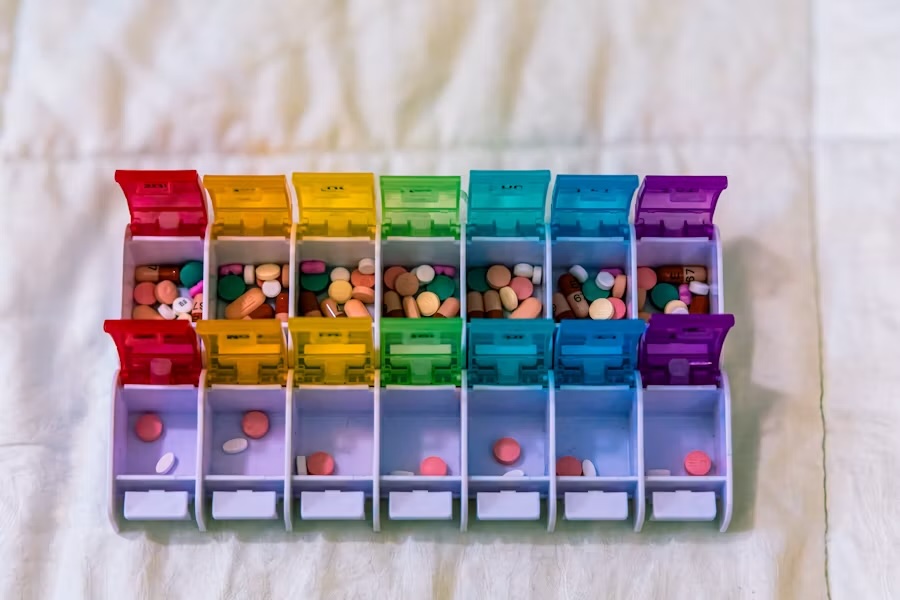
Start With a Medication System
Before leaving home, make a complete list or spreadsheet of every medication each person takes. Include:
- Medication name, both brand and generic if available.
- Strength and dosage.
- How often and when it is taken.
- Whether it must be taken with food.
- Storage requirements.
- Prescribing clinician’s name and contact information.
- Pharmacy name and phone number.
- Prescription number, if available.
- Insurance information.
- Allergies and important medical conditions.
Keep one copy digitally, and a hard copy somewhere secure in the travel vehicle. A medication list can be extremely helpful if you need urgent medical care, need to replace a lost prescription, or speak with a pharmacist in another town. The FDA recommends travelers know the medication name, strength, dosage form, and frequency in case medical treatment is needed while away from home.
For privacy and security, avoiding labeling a publicly visible storage box with detailed medical information. A simple internal medication organizer or locked case is usually enough.
Build Medication Into Your Daily Routine
When travel days are busy, it is easy to lose track of time. A medication routine that works at home may need a road-ready version.
It can be helpful to connect medications with an existing daily habit, such as:
- Morning coffee.
- Brushing teeth.
- The first meal of the day.
- Turning off the lights at night.
- A specific stop in the morning routine.
Pill organizers can be useful for some medications, but they are not appropriate for everything. Certain medicines need to remain in their original containers, others need refrigeration, and some can be affected by moisture, light, or being mixed together. Ask a pharmacist before transferring any medication from its labeled packaging.
Phone alarms, calendar reminders, medication apps, and smartwatch alerts can all help. For medications taken by two or more people, each person should ideally have a separate reminder system. It’s easy to assume the other person took a dose – or accidentally take the same dose twice – when routines are disrupted.
A simple written checklist can also help:
- Morning medications.
- Midday medications.
- Evening medications.
- Weekly or monthly injections.
- Refills needed.
- Supplies to replace.
Remember to always double check instructions for all prescriptions.
Keep Medications in a Dedicated, Secure Place
Medications should have a designated space in a travel vehicle. That makes them less likely to disappear into a drawer, fall behind a cabinet, or get left at a campsite.
A good storage location should be:
- Easy for you to access.
- Out of direct sunlight.
- Away from water and condensation.
- Protected from extreme temperatures.
- Secure while the van is moving.
- Not obvious to someone looking through the vehicle.
- Separate from cleaning products, food and drink, liquids that could spill, and loose equipment.
For controlled substances or medications that could be misused, consider a discreet lockbox secured to the vehicle. Do not leave medications unattended in visible areas or in an unlocked outdoor compartment.
At the same time, avoid putting essential medication somewhere so inaccessible that you cannot reach it quickly when you need it urgently. We want security without creating a new problem when it is time for a dose.
Never store medications in the vehicle’s hottest or coldest areas. Temperatures inside a closed vehicle can change dramatically, even when the outside air feels comfortable. The glove compartment, dashboard, roof storage, and areas directly against exterior walls may be particularly vulnerable.
Refrigerated Medications Require a Real Plan
Refrigerated medications are one of the biggest medication logistical challenges for van life. Weight management medications, insulin, biologic drugs, certain antibiotics, and other prescriptions may have specific temperature requirements.
The first rule is to follow the storage instructions for the exact medication you use. For instance, do not assume that all injectable GLP-1 drugs have identical requirements. Some products must remain refrigerated until use; some can be stored at room temperature for a limited period; and some should never be frozen. The manufacturer’s instructions and your pharmacist are the best sources for those details.
If you use a mini-fridge with an upper freezer compartment in your vehicle, remember that these can be especially prone to freezing items stored on the top shelf, near the freezer compartment.
Before traveling, ask:
- What temperature range is required?
- How long may medication remain at room temperature?
- What should I do if it gets too warm?
- What should I do if it freezes?
- Can the medication be returned to the fridge after being out?
- Does the medication need protection from light?
- How should an open pen, vial, or package be stored?
- What should I do during a power failure?
Do not guess whether medication is still usable after a temperature excursion. Call a pharmacist or the manufacturer using the contact information in the prescribing materials.
Choosing a Cooling Setup
A reliable setup may include a combination of some or all of the following:
- A medical medication cooler or insulated medication case.
- Reusable cold packs.
- A thermometer or temperature monitor.
- A small barrier between the medication and cold packs.
- Access to a dependable fridge.
- A backup plan for fridge failure.
Do not place medication directly against frozen packs unless the product instructions specifically allow it. Freezing can damage some medications, and a cooler can become colder than expected. An insulated case can protect against heat, but it does not automatically guarantee a safe temperature.
A portable fridge may be more dependable than a standard ice chest for long trips, but it relies on electricity and must be monitored. Make sure your battery bank, solar system, alternator charging, or campsite hookup can support it overnight and during cloudy weather.
If you use a vehicle fridge, learn its settings before leaving. Keep medication in a protected compartment rather than allowing it to shift against the cooling element.
Protect Medications From Sunlight and Heat
Even if the air temperature seems moderate, direct sunlight can heat a medication container quickly. Never leave medications on the dashboard, in a sunny window, or in a cooler sitting in full sun.
If you are unable to keep medications at a safe temperature in the vehicle for a while, you might take the medication with you – in its insulated case – whenever practical, when you go out. A parked van can heat rapidly, especially in the Summer. If you leave medications in the vehicle, use the coolest secure location available and avoid leaving it there longer than necessary.
Bring Enough Medication – and Some Margin
Running out of medications is an incredibly stressful situation for a traveler to face. Before departure, check every bottle, pen, vial, refill, and supply.
Count how many doses you will need, then allow extra time for:
- Weather delays.
- Vehicle repairs.
- Unexpected changes in plans.
- Pharmacy stock issues.
- Insurance delays.
- Illnesses.
- Staying longer than expected.
Ask your prescriber or pharmacy whether a vacation refill, extended supply, or mail-order option is available. Insurance plans may have limits, so address this before you leave rather than waiting until the prescription is nearly empty.
For medications that are difficult to replace – especially controlled substances, refrigerated injections, or compounded prescriptions – build in more planning time. A pharmacy may not have the same product, strength, or formulation in stock at your next destination.
Keep medications in their original labeled containers whenever possible. The FDA notes that original containers with the prescription label are recommended for travel, and travelers should generally carry personal-use quantities.
What to Do If You Are Running Low
If you realize you may run out, act early. Do not wait until the final dose.
Start by calling your prescribing clinician and current pharmacy. Ask whether they can send a prescription to a different location or authorize a transfer. Pharmacy rules can vary by medication and by state, and controlled substances may have additional restrictions.
Then:
- Find a pharmacy near your next stop.
- Call to ask whether it stocks the medication and strength.
- Ask whether it can transfer the prescription.
- Contact your insurance company if a refill-too-soon or location issue occurs.
- Ask your clinician whether a telehealth visit is possible.
- Keep notes about who you spoke with and what they told you.
Large pharmacy chains may be convenient because they have locations in multiple states, but an independent pharmacy can also be extremely helpful – especially when you need someone to investigate availability or contact a prescriber.
If a medication is unavailable, do not substitute another product or change the dose on your own. A pharmacist or clinician can advise you about safe options.
Finding Pharmacies on the Road
Before arriving in a new area, search for several nearby pharmacies rather than relying on the first result online. Check:
- Opening hours.
- Weekend and holiday hours.
- Whether the pharmacy is inside a store with different hours.
- Drive-through or pickup options.
- Vaccine and clinical services.
- Whether it can refrigerate a delivery.
- Whether it accepts your insurance.
- Whether it carries your particular medication.
Call ahead for medications that are expensive, specialized, refrigerated, compounded, or frequently backordered. Online inventory information may be incomplete or inaccurate, so speaking directly with the pharmacy is worthwhile.
If you use mail-order delivery, be cautious about having medication shipped to a location where it could sit in the sun, freeze, or be stolen. A staffed campground office, general delivery service, or trusted contact may be safer, but confirm the arrangement with the pharmacy first.
Carry Documentation and Supplies
Create a small medication travel kit containing:
- Current medication list.
- Prescription numbers.
- Pharmacy and clinician contact information.
- Insurance card or digital insurance information.
- Copies of prescriptions, if available.
- Alcohol wipes.
- Needles or pen tips.
- A travel sharps container for used needles.
- A thermometer for refrigerated medications.
- Backup batteries or charging cables for medical devices.
- A small first-aid kit.
The FDA recommends carrying used needles and syringes in a secure, puncture-resistant container. Do not put loose needles in trash bags, bottles that can break, or ordinary storage containers.
Ask local pharmacies, clinics, or waste facilities how they accept full sharps containers. Rules differ by location. Never leave a full container at a campsite, trailhead, or public trash can unless the site specifically provides an approved disposal system.
When Flying or Crossing Borders
Van lifers will occasionally fly home, take a ferry, or cross an international or state border. Keep medication in your carry-on bags rather than in checked luggage while flying, especially medication that is temperature-sensitive or essential. Airport security permits medically necessary medications and injectable supplies, but keeping them in original labeled packaging and carrying supporting documentation can make screening easier.
International travel requires additional research. A medication legally prescribed in one country or state may be restricted or unavailable in another. Check the destination’s rules before departure, particularly for controlled substances, syringes, stimulants, sedatives, and medications that are regulated differently abroad.
Carry only the amount you need for personal use plus a reasonable backup, and keep medication with the person whose name appears on the prescription whenever possible.
Make a Backup Plan for Power and Refrigeration
If the medication needs refrigeration, think through several failure scenarios:
- What if the van battery is depleted?
- What if the fridge stops working?
- What is a campground loses power?
- What if the weather becomes extremely hot?
- What if you need to spend the night at a repair shop?
- What if you have to evacuate or leave the vehicle for a while?
Identify nearby pharmacies, clinics, hospitals, hotels, and visitor centers that may have refrigeration or power. A backup battery, second cooling method, or insulated case may provide useful short-term protection, but none should replace the medication’s official storage instructions.
Keep emergency contact information available offline. Remote areas may have poor cell service, and a dead phone is not helpful during a time-sensitive problem.
Keep Travel Days Flexible Around Medication
Some medications affect appetite, digestion, energy, hydration, alertness, or blood sugar. That matters when planning long driving days, strenuous hikes, remote camping, or boondocking far from services.
Pay attention to how you feel and avoid scheduling a demanding activity immediately after a dose if you are still learning how your body responds. Bring food and water even if a medication reduces your appetite. Travel can make it easy to skip meals, become dehydrated, or mistake medication side effects for heat exhaustion, altitude effects, or ordinary fatigue.
If your medication causes nausea, diarrhea, dizziness, constipation, or another significant symptom, contact your healthcare professional rather than simply trying to push through it on the road.
A Simple Pre-Departure Checklist
Before leaving for a trip, it is always a good idea to confirm:
- There is enough medication for the entire trip, plus extra.
- Every prescription has a current refill.
- Refrigerated medications have a dependable cooling plan.
- Medications are protected from freezing, heat, and sunlight.
- Each person has reminders set.
- The medication list is current.
- Prescriptions and pharmacy information are saved offline.
- There are needles, wipes, and a travel sharps container if needed.
- You know where the next likely pharmacy will be.
- There is a plan for delays, repairs, and power loss.
- You know what to do if medication gets too hot, too cold, lost, or damaged.
Final Thoughts
Managing medications on the road takes some preparation, but it does not have to take over van life. A dedicated storage location, reliable reminders, extra supplies, and a temperature plan can turn a recurring worry into an ordinary part of the travel routine.
One key is to plan before the medication issue becomes urgent. Check on supplies before moving on, call pharmacies early, protect refrigerated medications from heat and freezing, and keep information you might need close at hand.
The road is unpredictable enough without adding avoidable medication emergencies. With a little organization – and a willingness to ask pharmacists and healthcare professionals for guidance – you can spend less time worrying about prescriptions and more time enjoying where the road leads.
Thank you, dear readers, for reading, following, and sharing. Here’s to your staying healthy on the road. If you enjoyed this post, please “like” and subscribe, if you have not already.
Check out my other blog, too – World Class Hugs, at https://worldclasshugs.com.
Note: We are a participant in the Amazon Services LLC Associates Program. As an Amazon associate, we earn from qualifying purchases. We appreciate your support!
Uncategorized Road Trips Wealth Van RV life Remote Income adventure hiking national-parks nature road-trip travel