Coral Pink Sand Dunes State Park in Kanab, Utah
By Rachel Puryear
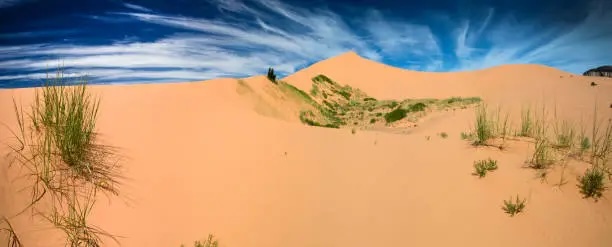
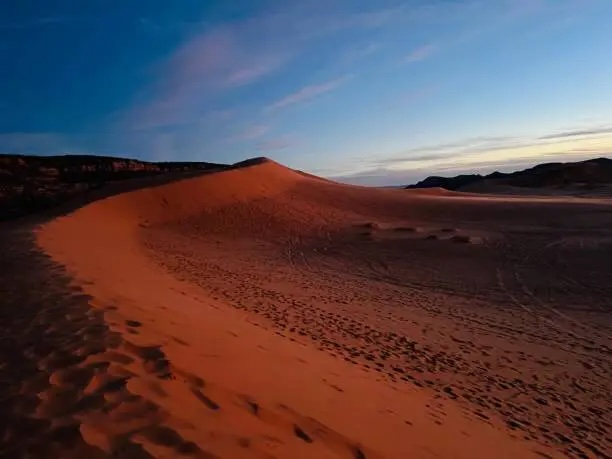
There are places where the landscape feels almost too improbable to be real. Coral Pink Sand Dunes State Park, near Kanab in southern Utah, is one of them: a vast field of rose, apricot, and salmon-colored sand framed by red-rock cliffs, juniper woodland, and wide-open sky.
The park encompasses nearly 4,000 acres and sits at about 6,000 feet (1,829 meters) in elevation. It is the only major sand-dune field on the Colorado Plateau – and the only known place in the world where the coral pink tiger beetle lives. Wind continually reshapes the dunes, sometimes moving them as much as 50 feet (15 meters) in a year.
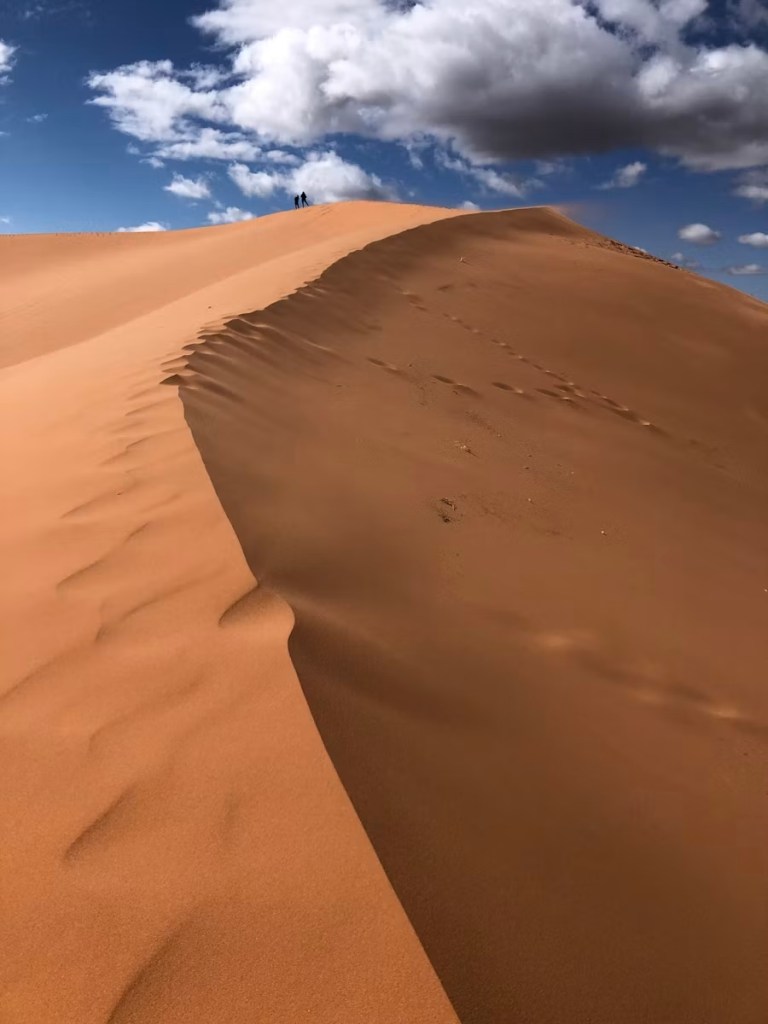
That constant movement gives Coral Pink Sand Dunes a wonderfully temporary quality. A ridge you climb today may look different on your next visit. Tracks disappear. Wind smooths footprints. Shadows redraw the slopes throughout the day.
For van/RV travelers and road-trippers exploring the Kanab area, the park makes an excellent half-day or full-day stop. It is open year-round during daylight hours, although Spring, early Summer, and Fall generally offer the most comfortable conditions.
Things to Do at Coral Pink Sand Dunes
Walk, Climb, and Play on the Dunes
No special trail is required to begin exploring. Visitors can walk directly into the dunes, wander along the lower slopes, or climb a ridge for a broader view. The sand is soft and that makes it challenging to walk upon, so even a short distance can feel like a workout – but that is also part of the fun.
Families may enjoy letting children build sand castles, run down gentle slopes, search for animal tracks, or simply experience the unusual sensation of walking across the vast landscape.
Early morning and late afternoon are especially beautiful. The low sun brings out the color and creates long blue shadows across the sand. Sunset can be spectacular, but remember that the long walk back to the parking lot may take longer than expected once the light fades.
Try Sandboarding or Sand Sledding
Sandboarding and sand sledding are among the park’s most popular activities. Boards and sand sleds may be rented onsite, making it possible to try the sport without bringing specialized equipment.
For the best experience:
- Use a board or sled designed for sand rather than an ordinary snow sled.
- Choose a slope with a clear runout.
- Check that no people, vehicles, vegetation, or fencing are below you.
- Expect to hike back up the dune repeatedly.
- Protect exposed skin from sand abrasion, especially on windy days.
- Bring water – the climb back up is often more strenuous than the ride down.
Children should use smaller, manageable slopes and have plenty of space around them. A sitting sled may be easier for beginners, while sand boarding usually takes a few attempts to master.
Rent an OHV or Join a Guided Tour
Approximately 90 percent of the dunes are open to off-highway vehicles, making Coral Pink Sand Dunes a major destination for ATV and UTV enthusiasts. The Sand Highway is a narrow, one-way trail in a canyon along the edge of the dunes, while the South Boundary Trail follows the eastern side of the main dune area for several miles.
Visitors can arrange guided UTV experiences in the Kanab area, and concessionaires generally operate during the warmer part of the year, often from March through October. Availability, age requirements, vehicle types, and reservations can change, so check current details before building your itinerary.
A guided tour can be a good choice if you have never driven on sand, are traveling with a group, or want to concentrate on the scenery instead of navigation. An experienced guide can also help you understand dune driving, recovery procedures, designated routes, and local regulations.
If you operate an OHV, use an orange whip flag, wear a properly fitted helmet, and obey all posted rules. Helmets are required by law for riders under 18, and Utah requires youth to be certified to operate an OHV on public lands. Never drive under the influence, and do not carry passengers unless the vehicle is designed and approved for them.
Motorized and non-motorized recreation share this landscape. Stay alert, follow one-way routes, keep clear of active riding areas, and give other visitors plenty of space, too.
Look for Wildlife and Subtle Desert Life
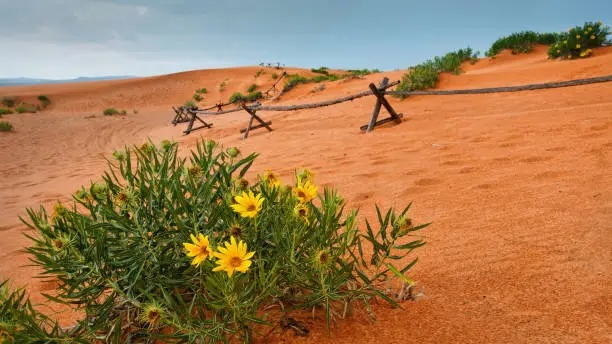
The dunes may seem empty and barren at first glance, but they support some specialized plants and animals. Keep an eye out for tracks in the sand, birds moving through the junipers, and signs of small mammals or reptiles.
The coral pink tiger beetle is one of the park’s most distinctive residents. Because small creatures and fragile vegetation can be difficult to see, walk carefully and avoid disturbing burrows, insects, plants, and other living things.
Stay for the Night
For visitors who prefer a slower experience, the park has two campgrounds. Facilities include hot showers, flush toilets, and a combination of dry-camping sites and sites with water and electricity available. There are also RV dump stations, and advance reservations are recommended.
Camping allows you to enjoy the dunes at quieter times – before the heat of the afternoon, during golden hour, and after dark when the surrounding sky can be ideal for stargazing. If you are traveling in a van, confirm site dimensions, hookups, generator rules, and reservation requirements before arriving.
An Experience for Many Kinds of Visitors
For Families
Coral Pink Sand Dunes can be an exciting family destination because visitors can adjust the experiences to their energy level. A family might:
- Spend a short time walking on the lower dunes.
- Rent a sand sled or board.
- Watch OHV’s from a safe distance.
- Explore around the campground or developed areas.
- Visit in the morning or late afternoon rather than during the hottest part of the day.
- Turn the visit into a fascinating geology, wildlife, or weather lesson.
Set a clear meeting point if family members spread out, and keep children within sight. The dunes can make distances difficult to judge, and a slope that looks nearby may require a tiring climb.
For People With Physical Limitations
The soft, shifting sand can be challenging for wheelchairs, scooters, walkers, and anyone with balance, joint, respiratory, or endurance limitations. That does not necessarily mean the park is off-limits, but it does mean that a satisfying visit may focus on accessible viewpoints, developed areas, short outings, and careful planning rather than deep dune exploration.
Consider:
- Calling the park ahead of time to ask about current accessible routes, surfaces, restrooms, parking, and equipment.
- Bringing mobility equipment suited to loose sand if appropriate.
- Visiting when temperatures are relatively mild.
- Exploring from the firmest available surfaces near developed areas.
- Choosing a scenic overlook or guided experience with minimal walking, if available.
- Traveling with another person who can assist if conditions become difficult.
- Carrying water, sun protection, and a way to communicate in case plans change.
Anyone with a medical condition affected by heat, altitude, exertion, or dehydration should plan conservatively. At 6,000 feet (1,829 meters), visitors who are accustomed to lower elevations may notice that strenuous activity feels more demanding.
For Experienced Hikers and Explorers
Strong hikers can make the dunes a surprisingly strenuous backcountry-style outing, even without a conventional trail. Walking on sand requires more effort than walking on firm ground, and climbing successive ridges can quickly become exhausting.
Experienced visitors may enjoy:
- Choosing an established route over several dune ridges.
- Exploring at sunrise or near sunset.
- Photographing changing textures and shadows.
- Studying wind patterns and tracks.
- Combining a dune hike with an OHV route or guided adventure.
- Camping overnight and returning to the dunes in a different light.
Even seasoned desert travelers should not treat the dunes casually. Carry more water than you expect to need, leave a route plan with someone, and use offline maps or another reliable navigation method. Cell service may be limited or inconsistent, and it is easy to lose your sense of direction among repeating slopes.
Prepare for the High-Desert Environment
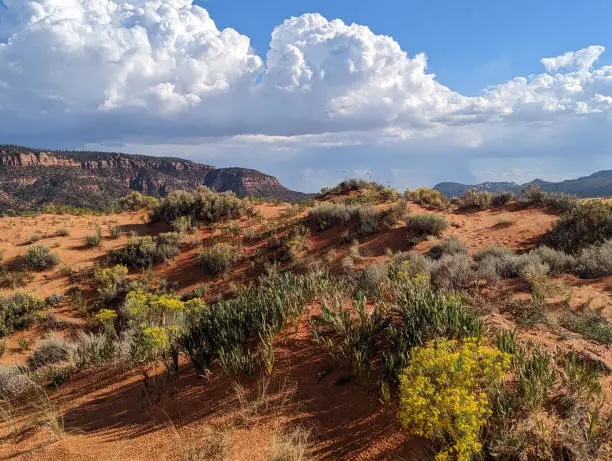
The scenery may look gentle, but the environment can be demanding. Elevation, intense sun, reflective sand, wind, rapid weather changes, and limited shade all deserve careful consideration.
Before heading into the dunes:
- Carry plenty of drinking water and start hydrating before you arrive.
- Wear a broad-brimmed hat, sunglasses, sunscreen, and lightweight protective clothing.
- Bring sturdy footwear, although some visitors may enjoy going barefoot briefly on cool, clean sand.
- Pack layers for changing temperatures.
- Carry food, electrolytes, a first-aid kit, and a fully charged phone.
- Protect cameras, phones, and vehicle equipment from blowing sand.
- Check the weather forecast and park conditions before going.
- Avoid strenuous climbs during the hottest part of the day.
- Watch for signs of heat illness; including headaches, dizziness, nausea, weakness, confusion, or unusual fatigue.
- Turn around early if wind, lightning, dust, snow, or falling temperatures make conditions uncomfortable or unsafe.
Summer heat can be severe, while Winter may bring cold, snow, and frozen or wet sand. Thunderstorms can develop quickly, and lightning is especially dangerous on exposed ridges. If dark clouds, strong winds, or blowing dust moves in, leave high dunes and return to your vehicle or another safe location.
Visit Lightly and Leave the Dunes Beautiful
Coral Pink Sand Dunes is a place to enjoy, but there’s also a collective responsibility to take care of it properly. The sand may look durable, but the park’s plants, wildlife, archaeological resources, and biological soil communities can be fragile.
A responsible and thoughtful visit means:
- Stay in designated OHV areas and follow posted routes.
- Do not drive over vegetation or closed areas.
- Keep pets leashed; pets must be on a six-foot leash in the park.
- Pack out all trash, and leave nothing but footprints behind.
- Use restrooms, and help keep them clean and tidy.
- Do not collect sand, plants, rocks, insects, or other natural objects – take only pictures, and leave natural elements where you found them.
- Leave animal tracks and natural formations undisturbed.
- Keep drones, music, and vehicle noise from disrupting other visitors and wildlife.
- Give people on foot plenty of room when operating an OHV.
- Use established camping areas and follow fire restrictions.
- Share the dunes rather than claiming a favorite slope or viewpoint for too long.
Sustainable travel also begins before arrival. Combine errands in Kanab, bring reusable water containers, avoid unnecessary idling, carry reusable utensils and food containers, and choose local guides or outfitters that follow responsible operating practices. A few small choices can reduce the impact on a beautiful, natural place that welcomes thousands of visitors each year.
Final Thoughts
Coral Pink Sand Dunes State Park is easy to underestimate. From the parking area, the dunes may look like a simple place to take photographs and stretch your legs. Once you step onto the sand, though, the landscape becomes immersive: every climb changes the view, every breeze alters the surface, and the colors shift from soft coral to glowing orange and rose.
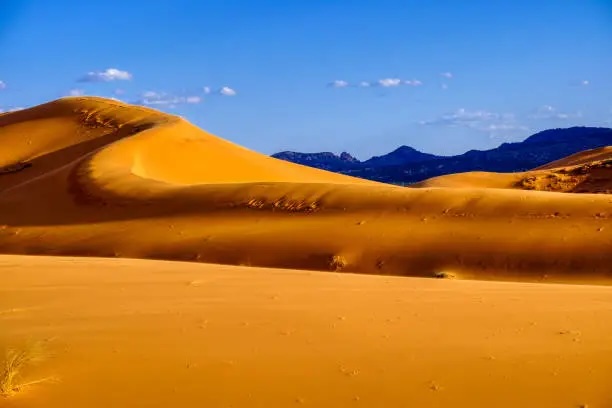
You can visit for an hour, spend a day sand boarding and exploring, rent an OHV, join a guided tour, or camp beneath the stars. The key is to match your plans to the conditions, your abilities, and the season – and to leave the dunes as undisturbed as possible for the next visitor, the next animal, and the next windstorm.
See here for more about visiting Coral Pink Sand Dunes State Park.
Thank you, dear readers, for reading, following, and sharing. Here’s to discovering the tremendous beauty of a tough desert environment. If you enjoyed this post, please “like” and subscribe, if you have not already.
Check out my other blog, too – World Class Hugs, at https://worldclasshugs.com.
Note: We are a participant in the Amazon Services LLC Associates Program. As an Amazon associate, we earn from qualifying purchases. We appreciate your support!
Remote Income Road Trips Uncategorized Van RV life Wealth hiking national-parks nature road-trip travel utah