Valley of Fire State Park in Southern Nevada
By Rachel Puryear
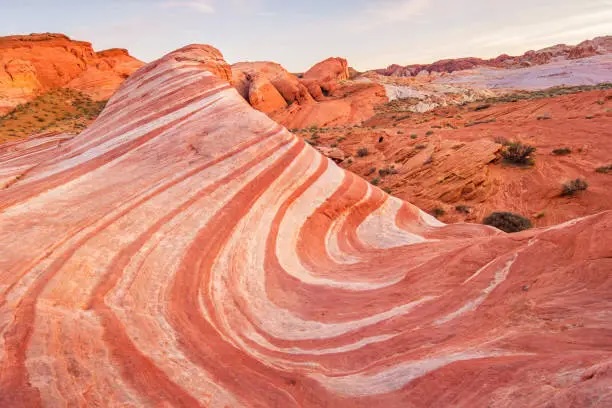
From the moment you start driving into this park, the landscape looks carved – bright, layered rock glowing in the sun, rock formations that seem to shift as the light changes, and wide-open desert quiet that makes your brain slow down.
Our visit here immediately reminded us why people fall in love with van life in the first place: vast landscapes with aching beauty, scenes that remind you just how small we all are, a place that truly feels timeless, opportunities to observe diverse wild plant and animal life, and glimpses into the lives of ancient peoples.
Below is a guide you can use to plan your visit, plus ideas for how to experience Valley of Fire in a way that’s both awe-filled and respectful.
Before You Go: What to Expect
Valley of Fire is dramatic, but it’s also remote and extremely hot in warmer months. The beauty comes from the desert itself: pale reds, pinks, and oranges in the rocks; long shadows; and a sky so big it makes everything else feel small.
You’ll come for the scenery, but you’ll remember the light – because the colors really do shift as the day goes on. Early mornings feel almost cool and temperate. Midday turns the rock into a furnace. Later in the afternoon, the whole valley can look like it’s on fire again, but in a softer, deeper way.
Planning for Hot, Dry Weather (Especially in Warmer Months)
The desert is beautiful – but it doesn’t forgive mistakes. If you’re visiting in warmer months (or even on a warm day), plan around heat and dehydration.
Pack and prepare like it’s a priority, not an option:
- Water, water, and more water: Bring more than you think you’ll need. Heat makes you drink more than you realize.
- Electrolytes: Plain water alone can be less helpful in intense heat. Consider electrolyte drops, packets, or tablets.
- Light, breathable layers: A protective hat and lightweight long sleeves can protect you without cooking your skin.
- Sun protection: Sunglasses and sunscreen are not “extra” – they’re part of the gear.
- Cooling strategy: If you can, plan a shaded break midday. A small cooling towel (or even a cool hat) can make a big difference.
- Respect the “warm weather” timing: Start hikes earlier and plan longer activities for morning and late afternoon/early evening. Midday is when you’ll feel it the most.
Smart timing checklist:
- Go early for hikes (and to enjoy the quiet).
- Take a longer midday break in the shade or your vehicle – with ventilation if you’re in a camping vehicle.
- Keep an eye on how you’re feeling, not just on the weather. Headache, dizziness, unusual fatigue, or nausea are red flags – stop and cool down.
Drive with desert caution:
- Roads can be bright and blinding – watch for fatigue.
- Give yourself extra buffer time. In remote areas, “we’ll just push little further” adds up fast.
Visiting Responsibly: Indigenous Petroglyphs
Valley of Fire isn’t just geology – it includes human and cultural history. This park is home to indigenous petroglyphs, which visitors are there to observe and honor.
Here are ways to visit respectfully:
- Stay on designated paths and areas around the petroglyph sites. Don’t climb on rocks or move into areas that can damage the carvings or the surrounding surfaces.
- Don’t touch the petroglyphs. Oils and abrasion from skin can harm them over time. Please take pictures only.
- Keep your distance for photos. Use your zoom and shoot carefully; avoid leaning in close or creating chaos around the carvings.
- Be quiet and mindful. Those marks are not a backdrop – they’re part of living heritage.
A simple mindset shift helps: treat the petroglyphs like you’re visiting something sacred and fragile, not like an outdoor “photo spot”. Kind of like how you would want people to behave when visiting cemeteries, places of worship, sacred grounds, and cultural monuments from wherever you originate from. When you approach with care, the experience feels deeper and more meaningful.
The Park Museum: Small Space, Big Context
If you have the time, be sure to make a stop at the park museum. It’s one of the easiest ways to turn “pretty rocks” into “wow, I understand what I’m looking at!”
Even a short museum visit can help you:
- Connect what you see in the landscape to the park’s broader story.
- Understand local geology and the forces that shaped these formations.
- Appreciate cultural history in a more informed way.
Consider it a warm-up before you hike – so you can look at the scenery with fresh context once you’re outside.
Hikes for Everyone: Easy Strolls to Enjoy Your Sunsets
Easier Options (Great for Families and Slower Days):
These are perfect when you want meaningful views without a long, strenuous effort: Fire Wave Trail, Rainbow Vista Trail, Mouse’s Tank Trail & Petroglyph Canyon, Elephant Rock Loop, and Balancing Rock Trail.
Also, remember to keep in mind:
- Short overlooks and viewpoint walks: Look for paths that take you to a rock formation or viewpoint with minimal elevation gain.
- Lighter loop hikes: Loops tend to feel rewarding because you can keep moving without needing a long out-and-back.
Safety tip: On warm days, an “easy” hike can still be rather intense. Bring water, start early, and take breaks.
More Challenging Hikes (For Those Up For It):
If you’re feeling strong, and want a deeper experience: these include White Domes Trail, Prospect Trail, Seven Wonders Loop Trail, and Pinnacles Trail.
Also, please always remember:
- Longer, more remote routes: Expect more time, more sun exposure, and more variable footing.
- Rougher terrain: Some trails feel rugged because the desert surface can be uneven, or hotter than you expect.
Tip: Choose these for morning and bring gear that supports real time outside – because deserts don’t stop being deserts just because you’re “in good shape”.
Watching the Rocks Change Color: The Best View Might Be Time
One of the most memorable parts of Valley of Fire is how the landscape evolves as the sun moves. The rock formations don’t just look different – they feel different.
Here’s how you can build that into your visit:
- Morning: Softer light, gentle shadows, colors that look lighter and almost pale-silvery before the reds really deepen.
- Midday: The rock brightens dramatically and can look almost luminous – plus it’s when heat is at its peak.
- Late afternoon: The magic returns. Reds deepen, contrast increases, and the valley starts to glow again.
- Van life idea: Plan your hikes and stops so that you’re not rushing. Choose one or two viewpoints and spend time there instead of treating the park like a drive-by. The color shift happens while you’re watching, not just while you’re walking.
A Simple “Road Trip Day” Itinerary: Flexible, Not Rushed
If you want a van-friendly flow that matches how the park really feels, try this:
- Arrive earlier in the day to beat the hottest hours.
- Start with a museum stop (or a short orientation with a ranger) if you want context.
- Do an easier hike in the morning – something that gets you views without draining anyone.
- Midday = slow down: shade, water breaks, and letting the heat pass.
- Choose a longer or more challenging hike for late afternoon if you still have energy.
- Finish with color watching – stay for the light changes, and let the day end naturally.
This structure works whether you’re traveling in a van, a car, or a mix of both – because it’s built around the park’s real rhythm.
Closing Thoughts: Freedom, Awe, and Respect
Valley of Fire is the kind of place that makes you grateful to be the type of traveler who can slow down. Van life freedom isn’t only about going – it’s about staying long enough to notice.
The desert teaches you to watch: the shadows, the sky, the rock textures, and the subtle shifts that happen over hours. And, it also asks something in return – respect. Especially when you’re near indigenous petroglyphs, treat them as cultural heritage, not just a stop on the route.
If you go, go prepared, go early, go carefully – and give yourself time to experience the park as it changes throughout the day.
Thank you, dear readers, for reading, following, and sharing. Here’s to hot, gorgeous, stunning desert beauty. If you enjoyed this post, please “like” and subscribe, if you have not already.
Check out my other blog, too – World Class Hugs, at https://worldclasshugs.com.
Note: We are a participant in the Amazon Services LLC Associates Program. As an Amazon associate, we earn from qualifying purchases. We appreciate your support!
Remote Income Road Trips Uncategorized Van RV life Wealth adventure hiking national-parks nature outdoors road-trip travel travel-tips